Issue · July 2026
Where AI stops being a demo and starts being infrastructure.
Transola tracks the systems, policies, and capital flows shaping the next operating layer of global finance — reported plainly, with the depth the shift deserves.
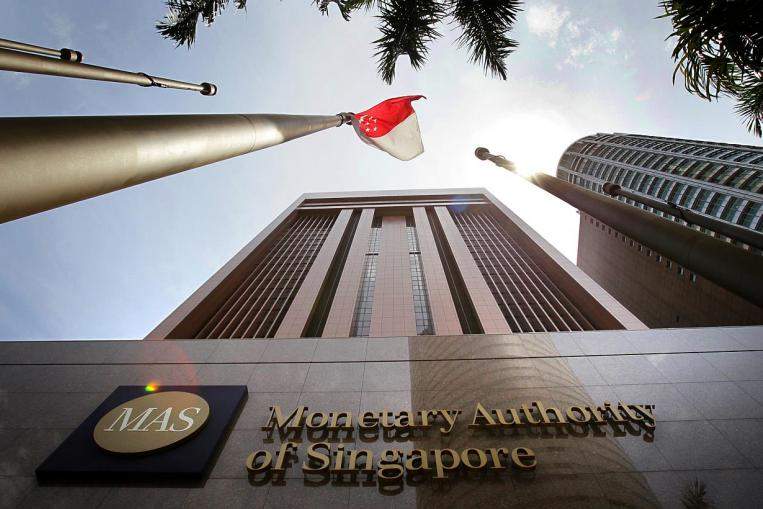
MAS Unveils 'SAFR' Framework to Govern Autonomous Financial Agents
On July 3, 2026, the Monetary Authority of Singapore (MAS), in collaboration with a consortium of leading financial institutions and FinTech innovators, released a pivotal white paper entitled 'Safeguards for Agentic Finance at Runtime' (SAFR). This framework addresses the critical challenge posed by the rise of autonomous AI agents that operate at speeds exceeding human oversight capabilities.
Source · Monetary Authority of Singapore (MAS)
UK Treasury Prioritizes 'Trust Framework' for Agentic Payments
HM Treasury / GOV.UK
The Rise of 'Infrastructure-First' Capital in Fintech
Crunchbase News
Gartner Highlights Shift to Multi-Agent Ecosystems in Global Banking
FintechNewsCH / Gartner
Agentic AI Emerges as Foundational Driver for Financial Productivity
Neurons Lab / McKinsey
More reporting
60 stories
Shift to 'AI-Native' Operating Systems in Global Banking
As of July 2026, the global banking sector is undergoing a profound architectural transition, moving away from legacy 'AI-powered' systems toward unified 'AI-native' operating environments. Recent insights from Gartner confirm that approximately 40% of major financial institutions are now prioritizing the development of modular AI application platforms.
FintechNewsCH / Gartner

Stablecoins Emerge as Critical Treasury and Settlement Infrastructure
Mid-2026 analysis indicates that stablecoins have moved beyond speculative interest, becoming a vital component of the treasury and settlement layer in modern fintech. According to the latest industry trends, serious operators are now integrating stablecoins to solve long-standing inefficiencies in cross-border payments, internal liquidity routing, and merchant settlement corridors.
Advapay Resources

The Rise of 'Regulatory Architecture' as a Competitive Moat
In 2026, the primary differentiator for fintech success has shifted from pure product innovation to the mastery of 'Regulatory Architecture.' Serious market participants are now focusing on building technical and legal frameworks that allow them to anchor across multiple jurisdictions while duplicating capabilities efficiently. This trend moves the industry away from the 'BaaS hype cycle' of previous years toward a model where the product architecture and the regulatory perimeter are tightly connected.
Advapay Resources / Fintech Industry Analysis

Hyper-Personalization in AI-Driven Banking Experiences
Hyper-personalization is becoming a critical strategic differentiator in the 2026 AI banking landscape. Financial institutions are leveraging advanced machine learning and generative AI models to analyze complex consumer behavior, spending patterns, and life-event data to offer highly tailored financial products.
Finastra

The Strategic Mandate for Adaptive Cybersecurity Systems
As AI agents and autonomous financial systems proliferate in 2026, cybersecurity is evolving into an 'adaptive systems race.' The integration of generative AI in financial workflows has necessitated a fundamental shift in how institutions defend against fraud, particularly as deepfake threats and sophisticated social engineering attacks become more prevalent. Industry leaders are investing in proactive, AI-enabled fraud prevention that moves beyond static rules to utilize real-time, context-aware threat detection.
Juniper Research / Advapay Resources

EU AI Act Compliance: The New Benchmark for Financial Services AI
As of July 2026, financial institutions operating within the European Union are in the final stages of preparing for the August 2nd deadline for high-risk AI system compliance under the EU AI Act. This regulatory milestone marks a significant pivot for the fintech sector, as use cases such as credit scoring, fraud detection, and automated underwriting are now formally classified as high-risk.
Eversheds Sutherland / EU Official Publications

Bipartisan Policy Center: AI Skills Demand Surging in Banking and Accounting
A report released in July 2026 by the Bipartisan Policy Center highlights a dramatic shift in labor market demand: core professional services—including banking, accountancy, and consulting—are now among the fastest-growing sectors for advanced AI talent. The data shows that the skills in highest demand are no longer limited to technical engineering roles; instead, they include competency in Hugging Face (up 77%), large language modeling (up 68%), and machine learning algorithms (up 64%).
Bipartisan Policy Center

Mastercard Report: Scaling Trust in the Age of Agentic Commerce
Mastercard's latest 2026 industry insights detail how 'Agentic Commerce' is evolving from a vision into an actionable payment infrastructure. As AI agents become autonomous digital proxies capable of performing tasks and making payments on behalf of consumers, the industry is racing to establish standardized security and identity protocols.
Mastercard Singapore

The Strategic Rise of 'Self-Driving' Treasury Functions
Corporate treasury departments are undergoing a rapid evolution in 2026, transitioning to 'self-driving' models powered by the convergence of AI and open banking APIs. These AI-driven systems now automate complex tasks—such as real-time liquidity forecasting, FX hedging, and investment decisions—that previously required intensive manual reconciliation.
Capco Intelligence

Selective Reopening: The Capital Concentration Trend in Fintech
Market analysis of the first half of 2026 reveals that fintech funding is experiencing a 'selective reopening,' characterized by significant capital concentration. While capital is available, investors are disproportionately favoring later-stage firms and infrastructure-focused platforms that provide clear, demonstrable value.
New Market Pitch

The Evolution of 'Agentic Readiness': Moving Beyond Pilot Projects
As of July 2026, the financial services sector is transitioning into the 'trust and readiness' phase of agentic AI adoption. While AI agents are technically capable of executing complex, multi-step tasks, research from Mastercard and Datos Insights indicates that the industry's primary hurdle is no longer model capability, but organizational readiness.
Mastercard Global / Datos Insights

The Mills Review: Shaping the Future of Autonomous Retail Finance
On July 6, 2026, the FCA published the final report of the Mills Review, offering a roadmap for how AI—particularly autonomous AI—will reshape retail financial services by 2030. The review introduces the 'AI Autonomy Spectrum,' tracking the shift of human roles from 'Operator' to 'Observer' as AI systems take on more delegated, continuous decision-making.
Freshfields / Financial Conduct Authority (FCA)

FinTech Investment Slowdown: AI Attracts Record Capital
Data released by Innovate Finance in July 2026 shows that while global FinTech venture capital investment slowed to $28 billion in H1 2026—a 12% decline from H2 2025—AI has become the dominant engine for capital allocation. With over $400 billion invested globally in AI technologies during the first half of the year alone, FinTech is increasingly viewed through the lens of AI-enabled infrastructure.
Innovate Finance

The Surge in Demand for AI-Competent Banking Talent
The professional services sector, specifically commercial banking and accountancy, is experiencing a rapid surge in demand for workers with advanced AI competencies as of July 2026. According to the Bipartisan Policy Center, demand for specialized skills like Hugging Face usage (+77%), large language modeling (+68%), and machine learning algorithms (+64%) is growing faster in banking than in traditional tech sectors.
Bipartisan Policy Center

techUK Report: Agentic AI Moves from Experiment to Live Deployment
A report from techUK, titled 'Agents of Change: Generative and Agentic AI in Financial Services 2026,' highlights that agentic AI is no longer a future concept but a reality in UK financial services, with 42% of firms already assessing or deploying these systems. The report emphasizes that the primary industry challenge for the second half of 2026 is managing the governance complexities of autonomous systems, including behavioral drift, supply chain concentration risk, and cyber resilience.
techUK

Lloyds Banking Group Pivots to Enterprise-Wide Agentic AI Deployment
In July 2026, Lloyds Banking Group announced a major strategic shift, declaring 2026 the year agentic AI moves from pilot testing to enterprise-wide deployment. Unlike previous incremental AI improvements, these new systems are designed to be proactive and autonomous, orchestrating complex multi-step workflows across the enterprise without constant human intervention.
Lloyds Banking Group

SoftBank and Sierra Partner to Scale AI Agent Experiences in Japan
On July 14, 2026, SoftBank Corp. and Sierra announced a strategic partnership to exclusively bring Sierra’s conversational AI platform to the Japanese market.
SoftBank Corp.

UK Implements 'Critical Third Parties' Regime to Manage Systemic Risk
On July 13, 2026, the United Kingdom officially brought into force new regulations under the Financial Services and Markets Act 2000 to establish the 'Critical Third Parties' (CTP) regime. This regulatory framework allows the UK financial authorities to designate and oversee specific third-party technology providers whose services are essential to the systemic stability of the financial sector.
Lewis Silkin / Financial Services and Markets Act 2000

The Rise of Agentic Commerce: Visa and Thredd Enable Autonomous Payments
In a move marking the acceleration of 'agentic commerce,' FinTech platform Thredd and issuer Zilch have partnered to enable agent-initiated payments on cardholder accounts. This initiative aligns with Visa's broader infrastructure efforts to facilitate a landscape where software agents—acting on behalf of consumers—can search for products, evaluate recommendations, and complete secure, authenticated purchases within user-defined budgets.
FinTech Global

EU AI Act: High-Risk Financial Systems Prepare for August Deadline
As of July 2026, European fintechs and financial institutions are intensifying their compliance efforts ahead of the looming deadlines for the EU AI Act. The regulation assigns AI applications to specific risk categories, with many core financial workflows—such as credit scoring, underwriting, and fraud detection—falling under the 'high-risk' designation.
Powens / EU Official Publications

UK Operational Resilience: CTP Regime Now Fully Operational
As of July 13, 2026, the United Kingdom has officially activated its oversight regime for 'Critical Third Parties' (CTPs). The Treasury has formally designated four major global technology providers—Amazon Web Services EMEA SARL, Google Cloud EMEA Limited, Microsoft Ireland Operations Limited, and Oracle Corporation UK Limited—as the first entities subject to this new regulatory framework.
HM Treasury / FCA

Cambridge CCAF: 52% of Financial Firms Now Piloting Agentic AI
The 2026 Global AI in Financial Services Report from the Cambridge Centre for Alternative Finance (CCAF) reveals a rapid acceleration in the adoption of autonomous technologies. According to the study, 52% of financial services firms are now either piloting or at advanced stages of adopting agentic AI, with 21% already having these systems in production.
Cambridge Centre for Alternative Finance (CCAF)

Scaling Agentic AI: The Operational Efficiency Dividend
As of July 2026, financial services firms successfully integrating AI agents into their production environments are reporting significant operational gains. Research from Neurons Lab and KPMG highlights that companies using autonomous agents see an average cost reduction of 35% and a 55% improvement in operational efficiency.
Neurons Lab / KPMG

Hyper-Personalization at Scale via AI Orchestration Engines
Fintechs are increasingly deploying 'AI Orchestration Engines' to achieve hyper-personalization at scale in 2026. Unlike static recommendation systems, these new agentic frameworks ingest real-time customer data to dynamically adjust financial products, lending terms, and robo-advisory strategies in response to shifting consumer behavior.
Uptiq Blog

The Strategic Imperative of Runtime AI Governance
With autonomous agents now performing end-to-end workflows in finance, the focus of 2026 has shifted from simple model development to 'runtime governance'. Because agentic AI models make autonomous, context-aware decisions without human intervention, financial institutions are prioritizing the implementation of strict business rule guardrails and real-time validation checks.
Neuronal Lab / Financial Stability Reports

FCA Mills Review Sets Strategic Blueprint for AI in Retail Finance
On July 6, 2026, the FCA published the final report of the Mills Review, offering seven priority recommendations for managing the rapid expansion of autonomous AI in retail financial services. The review concludes that while the current regulatory framework—covering operational resilience, the Senior Managers Regime, and the Consumer Duty—is robust, these systems will face increasing pressure as AI evolves toward more autonomous decision-making.
Financial Conduct Authority (FCA)
UK Operational Resilience: CTP Regime Fully Operationalized
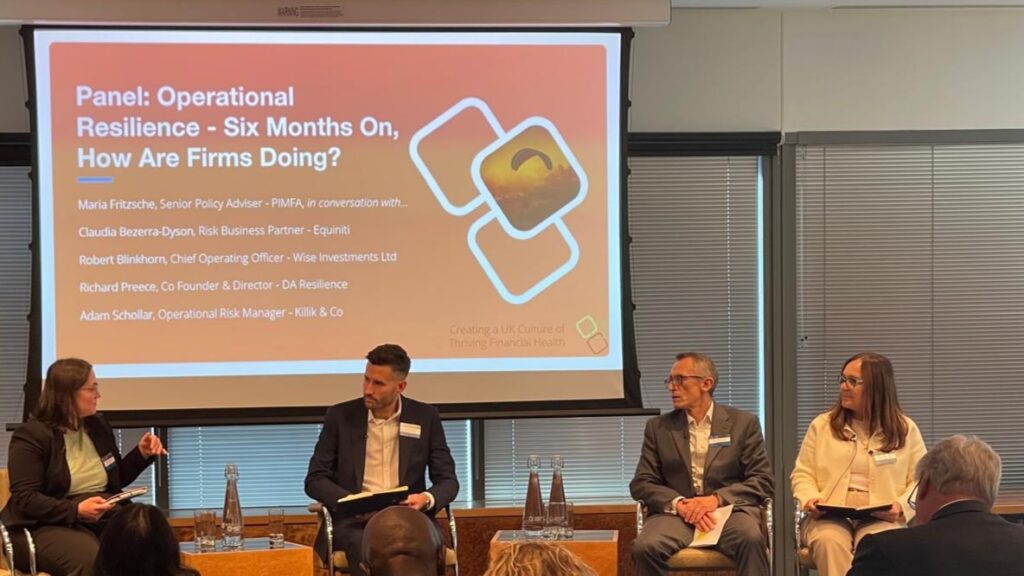
Effective July 13, 2026, the United Kingdom has officially activated its 'Critical Third Parties' (CTP) oversight regime. The Treasury has formally designated four major global technology providers—AWS, Google Cloud, Microsoft, and Oracle—as the first entities subject to this new regulatory framework.
HM Treasury / FCA / PRA

SoftBank and Sierra Form Partnership for Agent-Powered Customer Experience
On July 14, 2026, SoftBank Corp. and Sierra announced a strategic partnership to exclusively bring Sierra’s conversational AI agent platform to the Japanese market.
SoftBank Corp.

Global Study Finds Agentic AI Accounts for Half of AI Tokens
A comprehensive analysis of 380 trillion AI tokens, published in mid-July 2026, confirms the rapid dominance of agentic AI models in the global digital economy. The study found that while agentic systems—AI models capable of operating autonomously to complete multi-step tasks—accounted for only a small fraction of consumption in 2024, they now represent over 50% of all AI token usage.
Yale University / OpenRouter Dataset

Value of AI Report 2026: ROI Spikes as Agentic Adoption Matures
The 'Value of AI Report 2026,' based on a survey of 2,600 business leaders across 13 countries, reveals that the return on investment (ROI) for AI initiatives is spiking as organizations transition from piecemeal pilots to agentic-driven maturity. Average ROI from agentic AI is projected to reach US$17.6 million in the next two years, more than quadrupling from last year's estimates.
SAP / Global Research

Commonwealth Bank Launches 'CommBank Companion' in AI-Powered App Shift
On July 20, 2026, Commonwealth Bank highlighted the rapid deployment of 'CommBank Companion,' an AI-powered experience currently in testing within its mobile application. This development underscores a broader internal shift in how the bank approaches innovation, with engineering teams now moving from initial concept to a working, testable mock-up in a matter of hours rather than weeks.
Commonwealth Bank (CommBank)

FinTech Funding Analysis: The Reality of Selective Reopening
Data covering the first half of 2026 confirms that the fintech venture capital market is experiencing a 'selective reopening.' While nearly $4.2 billion was raised across 39 disclosed equity deals by early July, the capital distribution remains heavily skewed: the top 10 deals captured over 70% of total disclosed funding. This concentration indicates that while liquidity is returning, it is increasingly reserved for later-stage firms and specialized infrastructure providers, particularly in capital markets software and AI-driven financial services.
New Market Pitch

The Shift from 'BaaS Hype' to 'Operating-Model Debate'
In mid-2026, the fintech industry has pivoted from the 'Banking-as-a-Service' (BaaS) hype cycles of previous years to a rigorous debate over sustainable operating models. Serious operators are now prioritizing 'regulatory architecture'—a strategic approach to multi-jurisdictional growth that treats licensing, reporting, and onboarding as core infrastructure rather than backend burdens.
Advapay Resources
AI as the New Operating Layer for Financial Control Systems
AI is no longer being treated as a secondary efficiency tool in fintech; it is becoming the foundational operating layer for internal control systems. As firms move toward autonomous workflows, the industry is shifting its focus toward 'governance-at-runtime' to manage risks related to transaction monitoring, reconciliation, and internal quality assurance.
Advapay Resources / Various Industry Analysts

Capital Markets Software Draws Sustained Startup Investment
Capital markets software has emerged as a high-conviction category for investors in 2026, moving beyond simple equities trading into broader market infrastructure, AI-powered financial analysis, and private markets. Platforms such as Rogo, Cryptio, and others have provided clear proof points that this category is successfully attracting capital despite the overall contraction in deal counts.
New Market Pitch / Industry Data

UK Financial Regulators Activate Oversight of Critical Third Parties (CTPs)
As of July 13, 2026, the United Kingdom’s new oversight regime for Critical Third Parties (CTPs) is officially operational. Following formal designation by HM Treasury, the Bank of England, the Prudential Regulation Authority (PRA), and the Financial Conduct Authority (FCA) have begun direct oversight of four major global technology providers: Amazon Web Services, Google Cloud, Microsoft, and Oracle.
HM Treasury / FCA / PRA

Professional Services Outpace Tech Sector in AI Skill Demand
A report published in July 2026 indicates that the fastest growth in demand for advanced AI skills is no longer concentrated within the technology industry itself, but rather in professional services sectors—including commercial banking, accountancy, and management consulting. Bankers and accountants are increasingly required to master competencies previously reserved for technical roles, such as Hugging Face platform usage (+77% growth in postings), large language modeling (+68%), and machine learning algorithms (+64%).
Bipartisan Policy Center

Scaling Agentic AI: The Industry’s New Accountability Test
As financial institutions transition from AI experimentation to organization-wide deployment, a new World Economic Forum report emphasizes that 'trust' has become the primary product, not just a service byproduct. With agentic AI systems increasingly acting autonomously—sweeping deposits, executing trades, and making complex financial decisions—senior executives are grappling with a new 'accountability test'.
World Economic Forum (WEF)
2026 Fintech Funding: A Selective Recovery
Mid-year data for 2026 reveals a 'selective reopening' of the fintech venture capital market. While total funding for the first half of the year reached approximately $25.1B, the market remains highly concentrated.
New Market Pitch / Dealroom.co

Operationalizing Trust: The New Standard for Digital Payments
In an era of rising cyber-risk, the integration of 'cyber-fraud' defenses has become a top priority for digital payment infrastructure. A 2026 report commissioned by Mastercard notes that as organizations look to scale agentic AI, they must undertake a rigorous redesign of existing workflows to ensure that human oversight is not lost in automated processes.
Mastercard / Datos Insights

The Strategic Shift: AI Moves from 'Productivity' to 'Operational Core'
As of July 2026, the financial services sector has moved past the 'pilot phase' of artificial intelligence. For the past two years, generative AI in fintech was predominantly characterized by consumer-facing chatbots and internal coding assistants [1.1.3].
Deloitte / Various Industry Analysts
Agentic AI in Banking: From Controlled Pilots to Enterprise-Wide Deployment
2026 marks a historic step-change in banking: the graduation of agentic AI from controlled, experimental environments into live enterprise operations [1.2.1, 1.2.2]. Unlike generative AI, which primarily assists in creating content, agentic AI systems are autonomous, proactive, and capable of orchestrating complex, multi-step workflows across an organization [1.2.1, 1.2.4].
Lloyds Banking Group / Neontri

The Labor Market Transformation: AI Competencies Become the New Baseline
The labor market in 2026 is reflecting a dramatic 'operational transformation' across professional services. Demand for advanced AI skills is no longer concentrated within the tech sector; it is surging in commercial banking, accountancy, and consulting [1.1.1].
Bipartisan Policy Center
FinTech Funding 2026: The Global Landscape and Structural Shifts
Global fintech venture investment reached $28.6 billion in the first half of 2026, marking a 23% year-on-year increase compared to 2025 [1.3.3]. However, this headline growth masks a more complex, 'selective' investment environment [1.3.2].
Innovate Finance / Crunchbase

The Operational Resilience Mandate: PSD3 and the Future of Compliance
As fintechs and traditional banks alike navigate the regulatory landscape in 2026, operational resilience has become the dominant theme. With the progression of regulatory frameworks like PSD3 and PSR, the 'back-office messes' of the past are becoming impossible to hide [1.1.2].
BairesDev / European Commission

The 2026 Divide: Platform Coherence as the Ultimate Competitive Moat
By mid-2026, the financial services sector is witnessing a definitive re-segmentation of the market, not merely by the adoption of AI, but by the ability to operationalize it effectively. With approximately 94% of firms now piloting or deploying generative AI, the distinction between leaders and laggards has shifted to 'platform coherence'—the seamless integration of data, analytics, and AI workflows without friction.
Databricks Blog

MAS and Industry Partners Unveil 'SAFR' for Autonomous Financial Agents
On July 3, 2026, the Monetary Authority of Singapore (MAS), alongside a consortium of prominent financial institutions and fintech innovators, released a critical white paper on 'Safeguards for Agentic Finance at Runtime' (SAFR). As agentic AI systems—capable of planning, reasoning, and executing complex financial tasks autonomously—move from experimental pilots to production-grade deployment, the industry faces an urgent need for robust runtime governance.
Monetary Authority of Singapore (MAS)

Agentic AI Adoption: A 600% Projected Increase in Finance Teams
Research from July 2026 reveals that agentic AI is becoming a pivotal driver of operational efficiency in the financial sector, with Wolters Kluwer projecting that 44% of finance teams will adopt agentic AI within the year—an increase of more than 600%. Firms successfully deploying these systems are reporting significant business outcomes, including average cost reductions of 35% and 55% higher operational efficiency compared to traditional workflows.
Neurons Lab / Wolters Kluwer

2026 Fintech Funding: Quality and Readiness Over Pure Growth
The fintech venture capital market in mid-2026 is characterized by 'selective reopening' and a strong emphasis on quality over sheer deal volume. While disclosed equity deals through early July 2026 raised over $4.19B, the funding landscape is highly concentrated, with the top 10 deals accounting for over 70% of total disclosed capital.
New Market Pitch / Pearse Professionals

Hyper-Personalization and the Permanent Coexistence of AI and Human Banking
As of July 2026, hyper-personalized banking has emerged as a primary competitive differentiator, with machine learning and generative AI enabling banks to provide highly tailored financial experiences at scale. By analyzing intricate spending patterns, life events, and real-time financial signals, banks are increasingly able to anticipate customer needs before they arise, offering bespoke advice and proactive product recommendations.
Finastra

FCA Mills Review: A New Regulatory Compass for Autonomous Finance
On July 6, 2026, the UK's Financial Conduct Authority (FCA) published the final report of the Mills Review, establishing a strategic framework for AI in retail financial services through 2030. The review moves beyond viewing AI as merely a productivity tool, instead defining an 'AI autonomy spectrum' that maps the human role from 'Operator' to 'Observer'.
Freshfields / Financial Conduct Authority (FCA)

SoftBank and Sierra Partner to Scale AI-Agent Customer Experiences
On July 14, 2026, SoftBank Corp. announced a strategic partnership with Sierra to exclusively bring Sierra’s conversational AI platform to the Japanese market.
SoftBank Corp.

CommBank Highlights Rapid AI-Driven Product Iteration
As of July 20, 2026, Commonwealth Bank’s leadership has highlighted the transformative impact of AI on the speed of product development, citing internal shifts that have enabled teams to move from concept to working prototypes in mere hours. This operational agility, facilitated by pervasive internal access to AI development tools, allows the bank to iterate on customer outcomes with unprecedented speed.
Commonwealth Bank (CommBank)

FinTech Maturity: From Pilot Programs to Core Operational Layers
By mid-2026, the fintech industry has decisively moved past the 'pilot program' era of generative AI. The new strategic focus is on embedding intelligence directly into core financial operations—such as automated reconciliation, consent management, and real-time fraud rule pipelines—rather than superficial customer-facing chatbots.
Deloitte / Beetroot

Real-Time Payments and the New Operating Model
In 2026, real-time payment infrastructure has transitioned from an 'early adopter' feature to a mainstream competitive baseline. With network growth reaching historic levels, the immediate availability of funds has fundamentally altered the operating models of corporate treasuries and banks alike.
YS Lootah Tech / FedNow